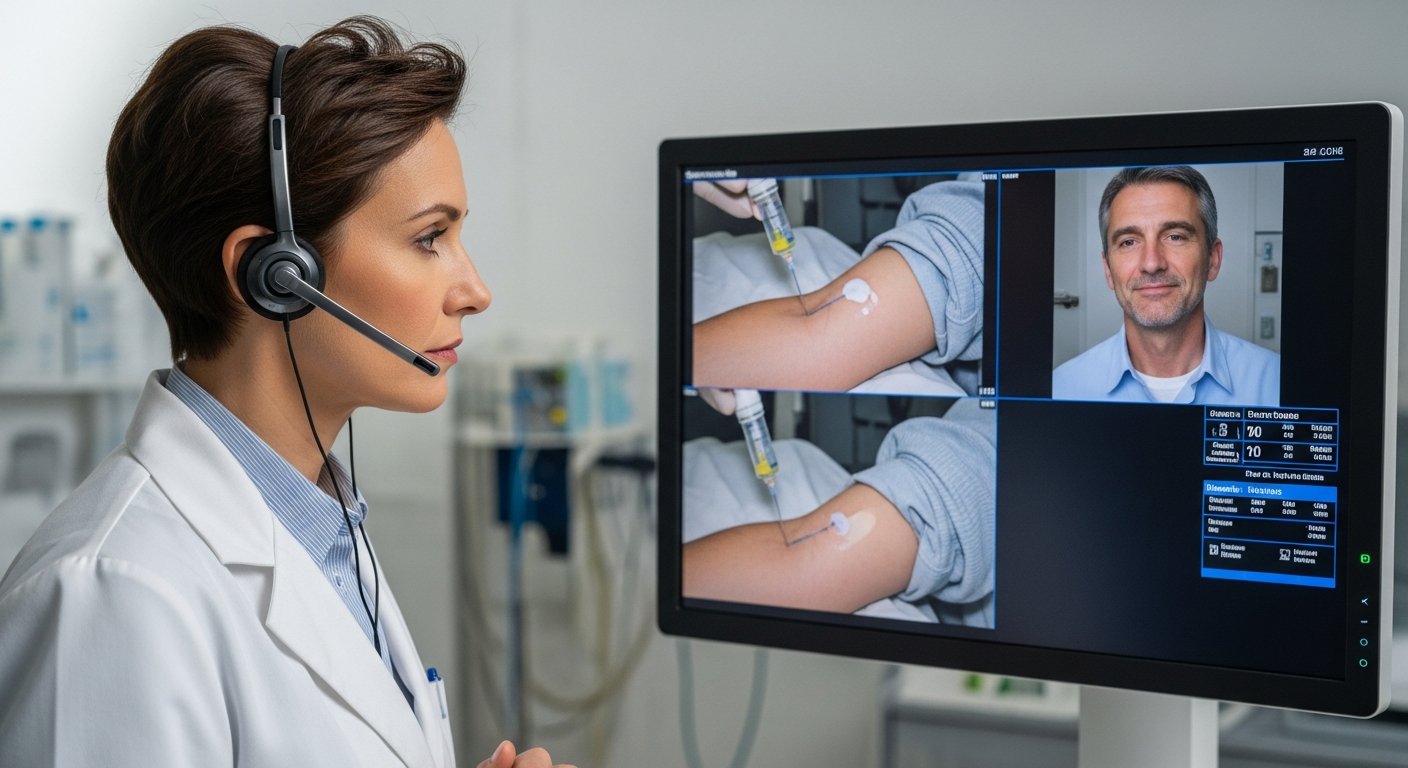
ContrastConnect announces an expansion of its remote virtual radiologist guidance services focused on contrast reaction recognition, escalation, and medication management for outpatient imaging centers. The service is aligned with Centers for Medicare & Medicaid Services (CMS) policies that recognize virtual direct supervision via real‑time audio‑video technology and with current ACR contrast supervision guidance, helping facilities adapt workflows while maintaining compliance and patient safety in eligible settings.
More information is available at https://www.contrast-connect.com/
Beginning January 1, 2026, CMS will permanently allow direct supervision for many Medicare Part B services—including contrast-enhanced CT and MRI—to be fulfilled through real-time audio-visual telecommunications (excluding audio-only), with exclusions for global surgical services. This finalized policy, adopted in the CY 2026 Physician Fee Schedule final rule, is accelerating efforts by imaging centers to adopt models that support rapid, expert reaction management without placing radiologists on-site at every location.
Federal regulations and professional guidelines require a qualified supervising provider during contrast media administration because acute adverse reactions—though uncommon—can be severe and time-sensitive. Evidence summarized in the ACR Manual on Contrast Media indicates severe anaphylactic-type reactions to modern non-ionic low-osmolar iodinated agents occur in roughly 0.04% of administrations, with nearly all life-threatening events arising within about 20 minutes of injection. This risk profile underpins CMS and ACR expectations for direct supervision, rapid recognition, and protocol-driven treatment.
CMS and ACR supervision requirements reflect this reality, placing responsibility on imaging center leadership to ensure rapid recognition of adverse reactions, appropriate treatment, and thorough documentation. CMS now recognizes virtual direct supervision, when delivered through compliant audio-visual platforms, as meeting requirements for many Medicare-covered contrast-enhanced services. ACR guidance supports this approach when institutions maintain written protocols, provide technologist and nurse training, and define clear escalation pathways.
As outlined in ContrastConnect's implementation guidance, its platform supports these requirements with HIPAA- and HITECH-compliant AV connections, automated logging, and audit-ready documentation that assists facilities during accreditation surveys and CMS reviews.
ContrastConnect anticipates that more imaging centers will formalize a dual-layer safety model by standardizing reaction algorithms, medication pathways, and documentation expectations that support survey-ready contrast programs in states where virtual supervision is permitted.
"Imaging centers are under pressure to balance access, safety, and regulatory expectations around contrast reactions," explained a spokesperson for ContrastConnect. "Our platform ensures technologists and nurses know how to escalate a suspected reaction, and a radiologist can join within seconds to confirm the diagnosis, guide emergency medications with on-site licensed practitioners, and support documentation that withstands regulatory review."
ContrastConnect's radiologists supervise more than 55,000 contrast exams monthly across hundreds of centers in states where virtual supervision is allowed, providing 44,000 hours of supervision and training to over 2,200 technologists. Its physicians manage 5-10 reactions daily, with zero missed responses across more than 200 partners, helping centers extend hours, reduce cancellations, and maintain ACR- and CMS-aligned reaction management.
For more details, visit https://www.contrast-connect.com/
ContrastConnect
309 Queens Gate Ct
Las Vegas
NV
89145
United States